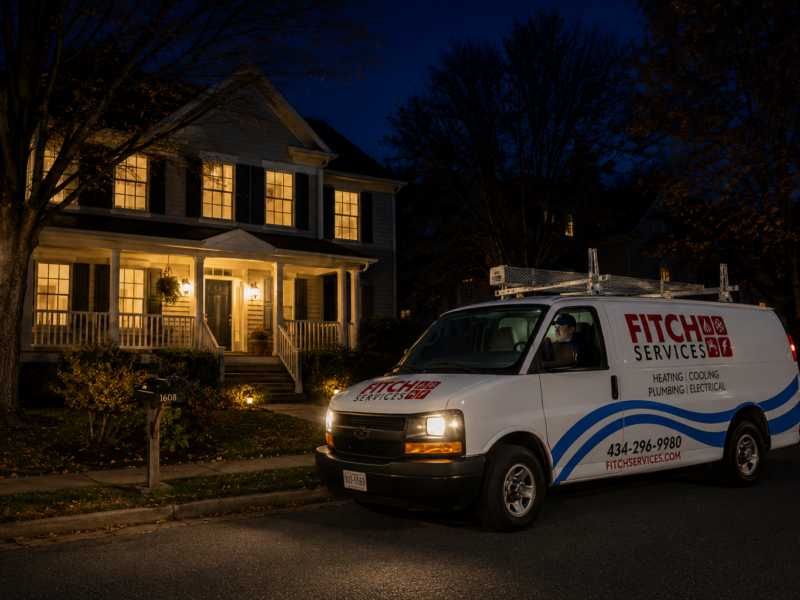
A plumbing emergency has a way of demanding immediate attention — water doesn’t wait, and the longer it goes unaddressed the more damage it does. Whether you’re dealing with a burst pipe, a major leak, a backed-up sewer, or no water at all, Fitch Services is available around the clock for emergency plumbing situations in Charlottesville and the surrounding area. If you need someone now, we’re available.
If Water Is Going Where It Shouldn’t — Act Now
Water damage compounds quickly. What starts as a burst pipe or a failed connection can saturate flooring, walls, and structural components in a matter of hours — and the longer it runs, the more expensive and disruptive the recovery becomes. If water is actively going somewhere it shouldn’t, the first priority is stopping it. The second is getting someone there who can fix it correctly and assess what the damage has already done.
When to Call — Even If You’re Not Sure
Some plumbing emergencies are obvious — a pipe that burst, a fixture that won’t stop running, a drain that’s backed up into the house. Others are less clear: a water heater that’s making sounds it never made before, a wet spot on the ceiling that appeared overnight, water pressure that dropped suddenly for no apparent reason. If something feels wrong, trust that instinct. The cost of an unnecessary service call is far smaller than the cost of water damage that developed while you were deciding whether to call. When in doubt, call.
What To Do Before We Arrive
If water is actively leaking or flooding, locate your main shutoff valve and turn off the water supply to the house. In most homes the main shutoff is near where the water line enters the building — in a utility room, crawl space, or basement. If you can’t locate it or it won’t turn, your water meter typically has a shutoff at the street. Move valuables and electronics out of the affected area if it’s safe to do so. Don’t attempt to use drains or fixtures connected to a backed-up line. When we arrive we’ll assess the situation and tell you exactly what you’re dealing with.
Why the Plumber You Call in a Crisis Matters
Emergency plumbing work requires someone who can diagnose quickly, work effectively under pressure, and make decisions about the right repair approach without cutting corners because the situation feels urgent. A temporary fix that fails again in two weeks isn’t a solution — it’s a delay. When you call for emergency help, you need a plumber with the experience to get it right the first time and the honesty to tell you what the situation actually requires.
Fitch Is Available Around the Clock in Charlottesville
We’re a licensed, family-owned company that has been serving Charlottesville and the surrounding area since 1983, and we take emergency calls seriously — because we understand what’s at stake when water is going somewhere it shouldn’t. Day or night, we’re available. If you have a plumbing emergency, call us now at 434-296-9980.
Frequently Asked Questions
A water leak isn't always obvious — many develop slowly and without visible signs. One of the simplest ways to check is to make sure all fixtures inside and outside your home are turned off, then go to your water meter, open the lid, and watch to see if any dial is moving. When no water is being used, nothing should be moving — even for several minutes. Common indicators also include an unexplained increase in your water bill, the sound of running water when nothing is in use, or wet spots appearing where they shouldn't. Even a small leak can amount to several gallons of wasted water over a 24-hour period — enough to show up noticeably on your water and sewer bill. If you suspect a leak but can't locate the source, a licensed plumber can perform a thorough leak detection.
A higher water bill can indicate a leak, but it can also be caused by a running toilet or dripping faucet. Reviewing recent bills can help identify whether usage has spiked suddenly or crept up gradually — a sudden spike often points to a more significant issue, while gradual increases may indicate something smaller. If you're concerned, a plumber can help identify the source.
A burst pipe can release a significant amount of water very quickly. The most important thing is to stop the flow of water — your main water shutoff valve controls the water supply to the entire house and turning it off will stop the flow while you wait for a plumber. Moving valuables and electronics out of the affected area if it's safe to do so can also help limit damage. A burst pipe is definitely an emergency situation that warrants an immediate call.
An overflowing toilet can usually be stopped by turning off the water supply valve located behind the base of the toilet — turning it clockwise will stop water from flowing into the tank and bowl. If that doesn't resolve it or the valve isn't accessible, shutting off the main water supply to the house will stop all flow — though keep in mind that will cut water to the entire home until a plumber can address the underlying problem. A toilet that overflows once and resolves is worth monitoring. One that overflows repeatedly, can't be stopped, or is backing up sewage warrants an immediate call.
If water is actively flooding your basement, your safety comes first — and this cannot be overstated. Standing water that has reached electrical outlets, appliances, or your electrical panel creates a serious electrocution risk. Do not enter a flooded basement if there is any possibility that the water has contacted electrical equipment. Turn off the electrical breaker for the basement from a safe, dry location if you can do so without entering the flooded area — or call your utility company to shut off power to the home. Once the electrical risk is addressed, shutting off the main water supply will stop the flow if the source is a plumbing failure inside the home. This is an emergency situation that warrants immediate professional attention.
When something feels wrong with your plumbing, it's almost always better to call sooner rather than later. Water damage compounds quickly — what starts as a small issue can become significantly more expensive and disruptive within hours. If you're uncertain whether your situation is urgent, that uncertainty itself is a good reason to call. A plumber can quickly assess whether something needs immediate attention or can be scheduled — and getting that answer early is always worthwhile.
Every home has a main water shutoff valve that controls the water supply to the entire house. In most homes it's located where the water line enters the building — near the water heater, in a utility room, basement, or crawl space. Knowing where yours is before an emergency happens is genuinely useful. Turning it clockwise will stop the flow of water throughout the home. If you can't locate it or it won't turn, your water meter at the street typically has a shutoff as well.
Frozen pipes are a serious concern because as water freezes it expands — and that expansion can crack or burst the pipe, leading to significant water damage when the pipe thaws. If you suspect a pipe has frozen but hasn't burst yet, the most important thing is not to try to thaw it aggressively with an open flame or high heat — that can damage the pipe or create a fire hazard. If a pipe has already burst, shutting off the main water supply immediately will stop the flow of water when it thaws. Either way — a frozen pipe or a burst pipe from freezing — warrants a call to a licensed plumber. Prevention is the best approach: if temperatures are expected to drop severely, keeping cabinet doors open under sinks on exterior walls and allowing a slow trickle of water to run can help prevent freezing in vulnerable areas.
The most common signs include multiple drains backing up or running slowly at the same time, gurgling sounds coming from drains when water runs elsewhere, sewage odors inside or outside the home, and wet or unusually green patches in the yard over the path of the sewer line. Any of these symptoms warrants prompt attention — sewer line problems don't resolve on their own and tend to get worse over time.
Common signs of a well pump issue include a sudden or gradual loss of water pressure throughout the house, air spurting from faucets, the pump running continuously or cycling on and off more frequently than usual, discolored or sandy water, or a complete loss of water. Unlike municipal water customers, homeowners on well water have no fallback when the pump fails — which makes early diagnosis important.
Water line leaks aren't always obvious — many develop slowly and underground. Signs to watch for include an unexplained increase in your water bill, soft or wet spots in the yard, reduced water pressure throughout the house, and the sound of running water when nothing is in use. Even a slow leak can waste a significant amount of water over time and worsen into a more serious problem.
Still have questions?

Real Reviews from Your Charlottesville Neighbors
See All ReviewsGeorgia P.Great Sewer Line Repair
James B. (Charlottesville, Virginia)Going to use them for everything I can now including my HVAC maintenance. Replaced my sewer line for a great price. Camera'd my line for free and gave me a truly free estimate whether I used them or not. Job ended up being tougher than what was expected and not once did they bring up the possibility of changing from what they quoted me. Good group of guys right there. Chris and his crew know what they're doing.
Paul B. (Charlottesville, VA)As I commented on both Facebook and Angie's List this was a good experience. The service was performed as scheduled and well. There was a glitch in the billing, but your own people detected it and contacted me about it and took care of it on your own initiative. Greatly appreciated!
Johanne (Charlottesville, VA)Very efficient, quick diagnosis, and quick fix.
Charlottesville Family Favorites Winner
Nextdoor Neighborhood Favorite Winner
Best of HomeAdvisor Winner
Elite Service HomeAdvisor Award
Ready to Schedule Service?
Let’s take care of it together.
Submit your request and experience the Fitch difference: a local team who shows up on time, and finishes the job right — often in a single visit.