Your HVAC system works harder than almost any other system in your home — running through the hottest days of summer and the coldest nights of winter without much thought from the people depending on it. Seasonal servicing is how you make sure it’s ready for what’s coming rather than discovering a problem in the middle of it. Two visits a year — one before cooling season, one before heating season — is the maintenance rhythm that keeps most systems running reliably and efficiently for their full service life.
Preventive Attention Costs Less Than Emergency Repair
An HVAC problem discovered during a routine service visit is a scheduling call. The same problem discovered on the first genuinely hot day in June or the coldest night in January is an emergency — with everything that comes with it. Emergency service rates, extended waits when every contractor in the area is backed up, and the particular misery of being without heat or cooling while it gets sorted out. Seasonal servicing doesn’t eliminate the possibility of a mid-season breakdown, but it significantly reduces it — and the cost of two maintenance visits a year is almost always less than a single emergency call, let alone a premature equipment replacement.
Spring Servicing — Getting the Cooling System Ready
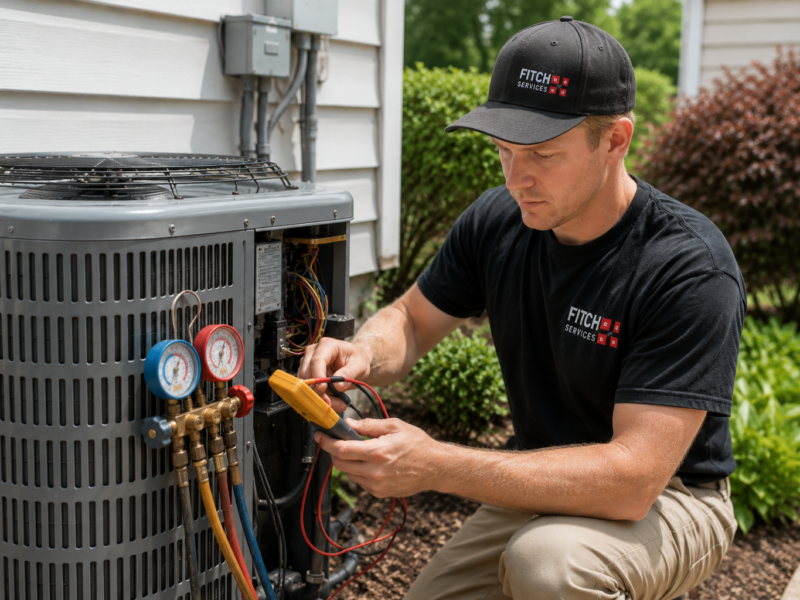
A spring HVAC service visit focuses on the cooling system — the components that are about to carry the load through a central Virginia summer. That means inspecting and cleaning the outdoor condenser coil, checking refrigerant levels, testing electrical components and controls, inspecting the indoor evaporator coil and drain line, checking airflow and filter condition, and verifying that the system is operating correctly and efficiently before the heat arrives. A condenser coil clogged with a winter’s worth of debris, a refrigerant charge that’s slightly off, or a drain line that’s partially blocked are all things that are straightforward to address in April and significantly more disruptive in July.
Fall Servicing — Getting the Heating System Ready
A fall service visit shifts the focus to the heating system — whatever is about to carry the load through a Virginia winter. For a gas furnace that means inspecting the heat exchanger, burners, ignition system, and flue, checking electrical components and controls, and verifying safe and efficient operation before cold weather arrives. For a heat pump it means inspecting the reversing valve, checking refrigerant charge, and confirming the system transitions correctly between heating and cooling modes. For a boiler it means inspecting combustion components, checking pressure and circulation, and addressing anything that could cause a failure during the heating season. Fall is when these issues are easy to address. January is when they aren’t.
What Seasonal Servicing Actually Prevents
The failures that seasonal servicing most reliably prevents are the ones caused by gradual degradation — a coil that gets progressively dirtier and less efficient, a capacitor that’s weakening and eventually fails to start the compressor, a drain line that partially blocks and eventually backs up, a heat exchanger that develops a crack that goes undetected until it becomes a safety issue. None of these announce themselves dramatically. They develop slowly and quietly until the moment they don’t. Seasonal servicing is the consistent attention that catches these things at the stage where they’re inexpensive to address rather than the stage where they’ve become emergencies.
Fitch Keeps Charlottesville Comfortable Year Round
We’ve been providing seasonal HVAC service to homeowners in Charlottesville and the surrounding area since 1983, and it’s one of the services we feel most strongly about — because we’ve seen what happens to systems that don’t get it. We’re a licensed, family-owned company and we approach every seasonal visit thoroughly and honestly. If something needs attention we’ll tell you. If everything looks good, we’ll tell you that too. Give us a call and we’ll make sure your system is ready for whatever season is coming.
Frequently Asked Questions
A heating and cooling system should have maintenance performed twice a year — once before the heating season and once before the cooling season. A thorough maintenance visit covers cleaning the system's coils, checking and lubricating all components, inspecting all electrical systems, and verifying refrigerant levels, among other items. Keeping up with this schedule is one of the most effective ways to extend the life of your equipment and avoid unexpected failures.
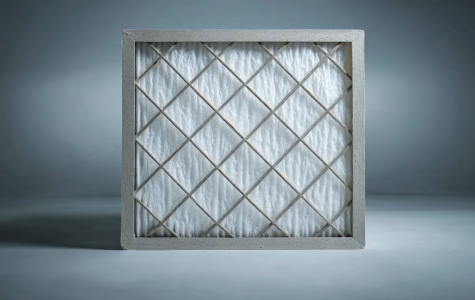
HVAC filters should be checked regularly and changed as needed — for most homeowners, every one to two months is about right. A clogged filter can cause the system to operate improperly, reduce efficiency, and shorten its service life.
There are several products available for your heating and cooling system that can help relieve allergy symptoms. UV germicidal lamps installed in the ductwork expose passing air to ultraviolet light, which can reduce airborne contaminants including bacteria, mold, and other biological particles. High-efficiency air filters can capture significantly more airborne particles than standard filters — in some cases up to 95% to 99%. The combination of a UV lamp and a high-efficiency filter can meaningfully improve indoor air quality.
There are several factors that contribute to winter energy costs — and understanding them can make a real difference on your heating bill. Heat loss through drafty windows, doors, and air leaks is one of the biggest culprits. Fireplace dampers left open when not in use allow warm air to escape continuously. Heating unused areas of the home wastes energy that could be directed where it's actually needed. Thermostat settings make a meaningful difference — for every degree the thermostat is lowered, heating costs decrease by roughly 3%. A programmable thermostat automates this without any daily effort. Attic insulation and storm windows reduce heat loss significantly in older homes. And keeping the heating system itself properly maintained is foundational — a system running on a dirty filter or with components out of adjustment works harder and costs more to operate. If your heating bills feel higher than they should be, a system evaluation is often the right starting point — an aging or inefficient system is frequently the biggest factor of all.
Dry indoor air in winter is a common problem — it can cause dry skin, irritated sinuses, static electricity, and damage to wood furnishings and flooring over time. The most effective solution is a whole-home humidifier integrated into your heating and cooling system, which automatically maintains consistent humidity levels throughout the house. Proper humidity levels also make the air feel warmer, which can contribute to greater comfort.
Still have questions?

Real Reviews from Your Charlottesville Neighbors
See All ReviewsGeorgia P.Great Sewer Line Repair
James B. (Charlottesville, Virginia)Going to use them for everything I can now including my HVAC maintenance. Replaced my sewer line for a great price. Camera'd my line for free and gave me a truly free estimate whether I used them or not. Job ended up being tougher than what was expected and not once did they bring up the possibility of changing from what they quoted me. Good group of guys right there. Chris and his crew know what they're doing.
Paul B. (Charlottesville, VA)As I commented on both Facebook and Angie's List this was a good experience. The service was performed as scheduled and well. There was a glitch in the billing, but your own people detected it and contacted me about it and took care of it on your own initiative. Greatly appreciated!
Johanne (Charlottesville, VA)Very efficient, quick diagnosis, and quick fix.
Charlottesville Family Favorites Winner
Nextdoor Neighborhood Favorite Winner
Best of HomeAdvisor Winner
Elite Service HomeAdvisor Award
Ready to Schedule Service?
Let’s take care of it together.
Submit your request and experience the Fitch difference: a local team who shows up on time, and finishes the job right — often in a single visit.