Plumbing fixtures are one of the more personal parts of a home — the faucet you reach for every morning, the shower you end the day in, the toilet that finally gets replaced after years of running. Whether you’re still figuring out what you want, you’ve already made your selection, or something simply needs replacing, getting it installed correctly means no leaks, no callbacks, and no surprises hiding behind the walls.
You Picked the Perfect Fixture. Now Let’s Get It Right.
Some homeowners come to us with a fixture already picked out and sitting in a box. Others are just starting to think about an upgrade and want guidance on what makes sense for their home. Either way, the installation is where everything comes together — or doesn’t. Plumbing has a way of presenting complications that aren’t visible until you’re already into the job, and a fixture installed incorrectly is one that leaks, fails early, or causes water damage that costs far more to fix than the installation would have. Getting it done right from the start is always the better path.
Where DIY Fixture Installs Usually Go Wrong
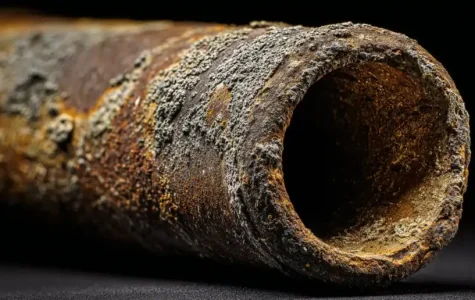
The fixture itself is rarely the problem. What trips up DIY installations is usually what’s already there — a shutoff valve that hasn’t been turned in twenty years and won’t fully close, supply lines that are corroded or the wrong size, a drain connection that doesn’t quite line up with the new fixture, or a toilet flange that’s damaged and needs repair before anything goes on top of it. These aren’t unusual situations, especially in older homes. They’re the kinds of things an experienced plumber spots immediately and addresses as part of the installation rather than discovering after the water is back on.
Faucets, Toilets, Showers, Garbage Disposals — We Handle It All
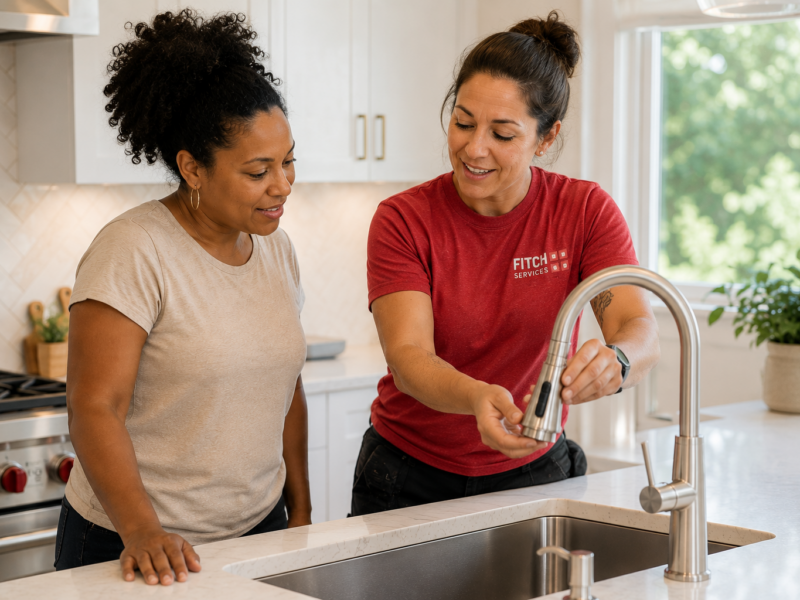
Fixture installation covers more ground than most homeowners realize. Faucet replacements — kitchen, bathroom, and utility — involve supply connections, drain assemblies, and in older homes often corroded shutoffs that need replacing at the same time. Toilet installations require a sound flange, proper seating, and correct supply connections to perform reliably for years. Shower and tub fixture work ranges from straightforward valve replacements to full trim kit installations coordinated around tile and surround work. Garbage disposal installations involve both plumbing and electrical connections and are best handled by someone comfortable with both. Dishwasher installations add supply, drain, and electrical into the mix. Whatever fixture you’re working with, we’ve installed it before.
Fitch Has Been Installing Fixtures Across Charlottesville for Decades
Fixture installation is some of the most satisfying work we do — it’s tangible, it’s immediate, and when it’s done right the homeowner notices the difference every single day. We’re a licensed, family-owned company that has been serving Charlottesville and the surrounding area since 1983. Whether you have a fixture waiting in a box, something that needs replacing, or you’re just starting to think about an upgrade, give us a call and we’ll get it done right.
Frequently Asked Questions
Predicting exactly when a water tank will start to leak is difficult. A better question to ask is: where will the water travel if the tank does leak? At Fitch Services, we recommend installing a tank drainage pan to protect your home. If that's not possible, a draining tube that carries leakage to a safe drainage area is a practical alternative. Age and condition are both factors in knowing when replacement makes sense — if your unit is showing signs of wear, performing inconsistently, or hasn't been evaluated in some time, a professional assessment is the best way to understand where things stand.
For a household of one to four people, a 40-gallon tank is generally sufficient. If one of those people is a teenager or you have a large soaker tub, a 60-gallon tank is a better choice. For larger households or those with unusually high hot water demand, a larger unit or a tankless system may be worth discussing with a plumber.
The lifespan of a water heater depends on several factors — the type of unit, the quality of the original installation, how well it has been maintained, and the quality of the water running through it. Tankless units generally last longer than conventional tank heaters with proper upkeep. Homes with hard water or acidic water conditions tend to see shorter lifespans without treatment, as mineral buildup and corrosion accelerate wear. Regular maintenance is one of the most effective ways to get the most out of any water heater — and if yours is showing signs of age or underperforming, a professional evaluation is the best way to assess where things stand.
A water softener addresses hard water — water with high mineral content — by exchanging those minerals for sodium through a process called ion exchange. This protects pipes, appliances, and fixtures from scale buildup and improves soap lathering. A water filtration system addresses contaminants — sediment, chlorine, bacteria, heavy metals, and other substances — by physically filtering or treating the water. Some homes need one, some need the other, and some benefit from both. The right solution depends on what's actually in your water.
In most cases, yes — plumbing work that involves new installations, relocations, or significant modifications typically requires permits and inspections. Permit requirements vary by locality but exist to ensure the work is done safely and to code. Working with a licensed plumber means permits are handled correctly as part of the process, and the work is inspected and documented before walls close up.
It depends on the type of system. Sediment filters remove particles and debris. Carbon filters address chlorine, taste, and odor issues. Reverse osmosis systems remove a wide range of contaminants including heavy metals, nitrates, and certain chemicals. UV systems target bacteria and other biological contaminants. Many homes benefit from a combination of treatment stages rather than a single filter — the right approach depends on what's actually in your water, which is why starting with a water test is always a good first step.
Common indicators include water that has an unusual taste or odor, visible discoloration or sediment, staining on fixtures or appliances, or a water test that has flagged contaminants above recommended levels. Homes on well water in particular benefit from regular testing since well water quality can change over time and varies significantly by location. Even homes on municipal water may benefit from filtration depending on local water quality conditions and individual household preferences.
Hard water contains elevated levels of dissolved minerals — primarily calcium and magnesium. Over time these minerals accumulate inside pipes, water heaters, and appliances, reducing their efficiency and shortening their lifespan. Hard water also leaves scale deposits on fixtures and glassware, reduces the effectiveness of soaps and detergents, and can cause dry skin and hair. In areas with particularly hard water, the cumulative damage to plumbing and appliances can be significant.
Simply carry out routine maintenance on your equipment and you will always have clear lines. At what temperature should I set my hot water tank? The optimum temperature is subjective. It all depends on your needs. The temperature should be set in your house based on who will use the facilities. For example, if you have young children I recommend lowering the maximum temperature to prevent accidental scalding.
Still have questions?

Real Reviews from Your Charlottesville Neighbors
See All ReviewsGeorgia P.Great Sewer Line Repair
James B. (Charlottesville, Virginia)Going to use them for everything I can now including my HVAC maintenance. Replaced my sewer line for a great price. Camera'd my line for free and gave me a truly free estimate whether I used them or not. Job ended up being tougher than what was expected and not once did they bring up the possibility of changing from what they quoted me. Good group of guys right there. Chris and his crew know what they're doing.
Paul B. (Charlottesville, VA)As I commented on both Facebook and Angie's List this was a good experience. The service was performed as scheduled and well. There was a glitch in the billing, but your own people detected it and contacted me about it and took care of it on your own initiative. Greatly appreciated!
Johanne (Charlottesville, VA)Very efficient, quick diagnosis, and quick fix.
Charlottesville Family Favorites Winner
Nextdoor Neighborhood Favorite Winner
Best of HomeAdvisor Winner
Elite Service HomeAdvisor Award
Ready to Schedule Service?
Let’s take care of it together.
Submit your request and experience the Fitch difference: a local team who shows up on time, and finishes the job right — often in a single visit.