A furnace or boiler that stops working in cold weather isn’t something that can wait. Whether your heat went out completely, is struggling to keep up, or something just doesn’t seem right with how the system is running, getting it diagnosed and repaired quickly and correctly is the priority. Fitch Services repairs furnaces and boilers across Charlottesville and the surrounding area — and we take heating calls seriously because we know what’s at stake when the heat goes out.
Your Heat Isn’t Working. Let’s Fix That.
If you’re on this page because your heat has stopped working, you don’t need a lengthy explanation of why heating repair matters. You need someone who can get there, figure out what’s wrong, and fix it. That’s what we do. We’ll move with urgency — but urgency and accuracy aren’t mutually exclusive. Getting the diagnosis right is what determines whether the repair actually holds, and that’s always the goal.
Common Reasons Furnaces and Boilers Stop Working
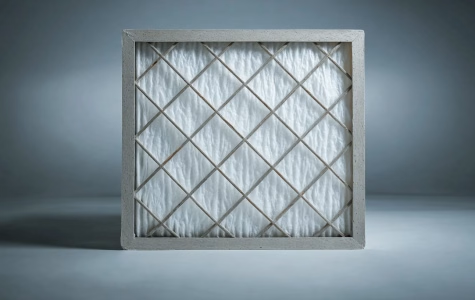
Heating system failures have a predictable set of causes. Ignition system failures — a faulty igniter, pilot light, or flame sensor — are among the most common furnace issues and often straightforward to diagnose and repair. A failed blower motor, a tripped limit switch, or a clogged filter that’s caused the system to overheat and shut down are other frequent culprits. For boilers, circulator pump failure, pressure issues, a failed zone valve, or a faulty aquastat are common causes of a system that won’t heat properly. In older systems, worn or failed controls, heat exchangers that have cracked, or components that have simply reached the end of their service life all factor in. Accurate diagnosis is what determines the right repair — and that requires someone who knows these systems.
Repair or Replace — The Question Worth Asking
Not every heating system failure warrants a repair. A system that’s fifteen or more years old, has needed multiple repairs in recent seasons, and is running at an efficiency level that’s costing the homeowner money every month is a different conversation from a newer system with a specific component failure. We’ll give you an honest assessment of where your system stands — the age, the condition, the cost of the repair relative to the remaining service life of the equipment — and help you make a decision that makes sense financially and practically. If repair is the right answer we’ll tell you. If replacement makes more sense we’ll tell you that too, and why.
What a Proper Heating Repair Actually Involves
A heating repair starts with an accurate diagnosis — not a guess, not a parts swap until something works. Once the cause is identified the repair addresses it completely, with the right components and the right approach for that specific system. The system gets tested after the repair to confirm it’s operating correctly and safely — including a check of safety controls and, for combustion systems, a confirmation that there are no carbon monoxide concerns. A repair that brings the heat back on without confirming the system is safe and operating correctly isn’t a repair that’s actually done.
Fitch Repairs Heating Systems Across Charlottesville
We’ve been repairing furnaces and boilers in Charlottesville and the surrounding area since 1983 — gas and oil systems, forced air and hydronic, older systems and newer ones. We’re a licensed, family-owned company that’s available around the clock for heating emergencies and approaches every repair thoroughly and honestly. If your heating system isn’t working the way it should, give us a call. We’ll get it sorted out.
Frequently Asked Questions
The life of a heating and cooling system is determined by many factors — the most important being regular maintenance. A well-maintained system will generally last its full design life, though that varies by equipment type and operating conditions. If you have a split system that is over 10 years old and one section fails, it's generally wiser to replace both the indoor and outdoor units at the same time rather than just the failed component — it's more cost-effective in the long run and avoids the efficiency and compatibility issues that come with mismatched equipment. If you do replace only one section, make sure the new component is matched by model and make to the existing unit — a mismatch will not work correctly.
A system that won't run can have several causes — from a tripped circuit breaker to a failed component inside the equipment. If your system has stopped running unexpectedly, it's worth having a licensed technician evaluate it to identify the actual cause and get it running correctly.
The decision to repair or replace a heating and cooling system depends on several factors — the age of the equipment, its overall condition, how efficiently it's running, and how much longer you plan to stay in your home. A system that's more than ten years old, has needed multiple repairs, or is driving noticeably high energy bills is often a better candidate for replacement than continued repair. A licensed HVAC technician can give you an honest assessment of where your system stands and what makes the most sense for your situation.
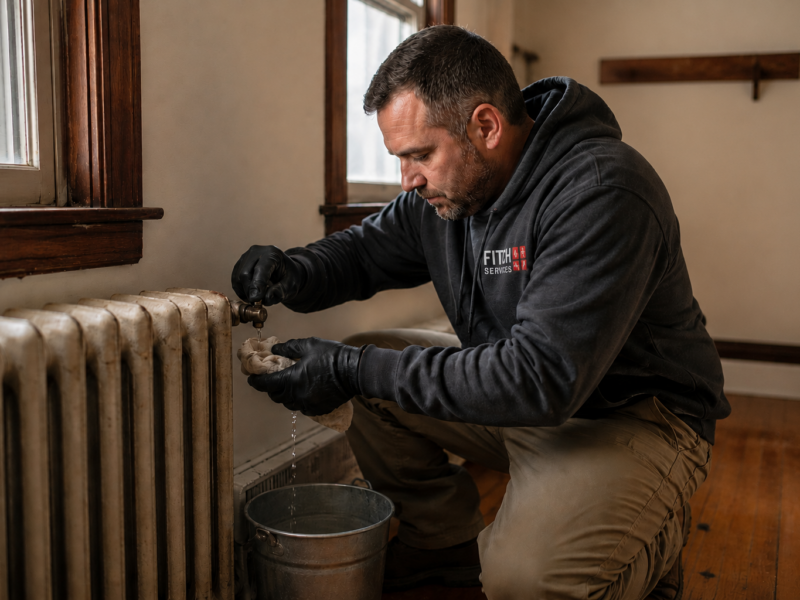
Air trapped in a hydronic system can prevent radiators from heating properly. Bleeding — the process of releasing that trapped air — is a relatively simple procedure but one that's best handled by a licensed technician who can also check the system's overall pressure and condition at the same time. If you need to bleed radiators frequently, it may indicate a larger issue with the system worth investigating.
Banging or knocking sounds from a radiator are most commonly caused by trapped air or water hammer — a pressure surge that occurs when steam or hot water moves through the system. In steam systems, banging often indicates a pitch problem with the pipes or a failed steam trap. In hot water systems it may indicate air in the lines. These sounds are worth addressing — they often point to issues that affect system performance and can cause component wear over time.
Some of the clearest signs that a furnace may be approaching the end of its useful life include: it has needed multiple repairs in recent seasons, heating bills have increased without a change in usage, some rooms are noticeably harder to heat than others, or the system is making unusual sounds. Age is also a factor — an older system showing any of these symptoms is a stronger candidate for replacement than a newer one with the same issues. A licensed HVAC technician can give you an honest assessment of where your system stands.
A gas smell near any appliance or equipment is a serious safety concern. Leave the home immediately without using light switches, phones, or anything that could create a spark. Once outside, call your gas utility's emergency line and 911. Do not re-enter the home until it has been inspected and cleared by the appropriate authorities.
Yes — carbon monoxide is a serious safety concern in any home with gas, oil, or other fuel-burning appliances. When combustion isn't complete, carbon monoxide enters the air — and because it's odorless and colorless, it's impossible to detect without a working CO detector. The U.S. Consumer Product Safety Commission advises that carbon monoxide detectors are the only reliable way to alert you to its presence. If you or a family member experiences unexplained headaches or difficulty waking, treat it as a potential emergency and seek medical care immediately. Annual maintenance of combustion heating equipment is an important part of keeping your system operating safely.
An old furnace can be very dangerous. All furnaces have a major component called a heat exchanger. A heat exchanger consists of a series of closed chambers that are heated with gas or oil burners. As the heat exchanger is heated the metal it is constructed from expands and as it cools it contracts. If you can imagine a paper clip that is being bent back and forth, it will eventually break. The same goes with a heat exchanger. After years of expanding and contracting it will eventually crack. When this happens, deadly carbon monoxide gas (which is normally vented through the flue) can get into your home. A furnace’s heat exchanger should be inspected every year before the heating season.
No — replacing only the outdoor unit on an older system will sacrifice comfort and reduce the overall efficiency of the system. Mismatched components can also cause the new equipment to fail sooner than expected, and most manufacturers' warranties require matched systems. Replacing the complete system is almost always the better investment.
Still have questions?

Real Reviews from Your Charlottesville Neighbors
See All ReviewsGeorgia P.Great Sewer Line Repair
James B. (Charlottesville, Virginia)Going to use them for everything I can now including my HVAC maintenance. Replaced my sewer line for a great price. Camera'd my line for free and gave me a truly free estimate whether I used them or not. Job ended up being tougher than what was expected and not once did they bring up the possibility of changing from what they quoted me. Good group of guys right there. Chris and his crew know what they're doing.
Paul B. (Charlottesville, VA)As I commented on both Facebook and Angie's List this was a good experience. The service was performed as scheduled and well. There was a glitch in the billing, but your own people detected it and contacted me about it and took care of it on your own initiative. Greatly appreciated!
Johanne (Charlottesville, VA)Very efficient, quick diagnosis, and quick fix.
Charlottesville Family Favorites Winner
Nextdoor Neighborhood Favorite Winner
Best of HomeAdvisor Winner
Elite Service HomeAdvisor Award
Ready to Schedule Service?
Let’s take care of it together.
Submit your request and experience the Fitch difference: a local team who shows up on time, and finishes the job right — often in a single visit.