Hydronic heating has a following for good reason. The even, quiet warmth that comes from hot water moving through radiators, baseboard units, or radiant floors is genuinely different from forced air — and homeowners who have it tend to want to keep it. But hydronic systems are more complex than forced air and require a contractor who actually understands them. If you have a hydronic system and want someone who knows what they’re looking at when they walk in the door, you’re in the right place.
Hydronic Heat Is Different — and So Is Maintaining It
Forced air systems heat space by moving air. Hydronic systems heat space by moving water — and that distinction produces a fundamentally different maintenance and service landscape. The boiler at the heart of a hydronic system, the circulator pumps that move water through the system, the expansion tank that manages pressure, the zone valves that control distribution, and the terminal units — radiators, baseboards, or radiant panels — all require specific knowledge to service correctly. A technician who primarily works on forced air systems can find themselves genuinely out of their depth on a hydronic system, and the consequences of that tend to be expensive. Hydronic systems deserve someone who knows them.
How a Hydronic System Actually Works
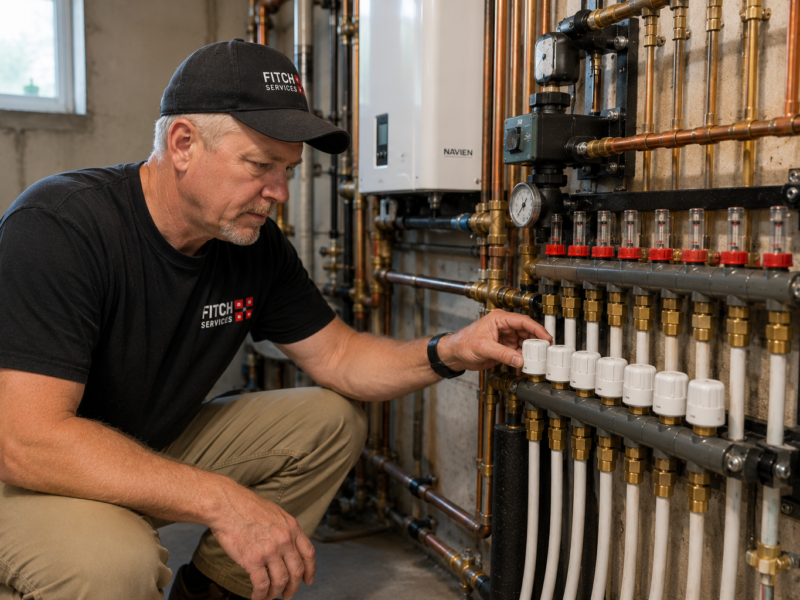
A hydronic heating system starts with a boiler that heats water to a specific temperature and circulates it through a closed loop of piping to terminal heating units throughout the home. As the water releases its heat into the living space it returns to the boiler to be reheated and recirculated. The system is controlled by a combination of thermostats, zone valves, and circulator pumps that direct heated water to the zones calling for heat. Radiant floor systems work on the same principle but distribute the water through tubing embedded in or below the floor, warming the floor surface and radiating heat upward into the room. It’s a closed, pressurized system — which means pressure, water quality, and component integrity all matter in ways that forced air systems simply don’t deal with.
What Can Go Wrong — and What to Watch For
Hydronic systems are generally reliable, but they have failure points that are specific to how they work. Circulator pump failure is one of the most common — a pump that stops moving water means no heat, even if the boiler is firing correctly. Expansion tank failure causes pressure problems that can affect the whole system. Zone valves can stick open or closed, causing uneven heating or no heat in specific areas. Air in the system — introduced during service or through a slow leak — causes gurgling sounds and reduces heat distribution. Boiler components including heat exchangers, burners, and controls all require periodic inspection. And in older systems, corrosion and sediment buildup in the piping can reduce flow and efficiency over time. Knowing what to look for is the difference between catching a problem early and discovering it on the coldest night of the year.
The Contractor You Choose Matters More Than Usual Here
Hydronic systems are not universal HVAC contractor territory. Many technicians who are perfectly capable on a forced air system have limited experience with boilers, circulator pumps, expansion tanks, and the specific diagnostic approach that hydronic systems require. Choosing a contractor who genuinely knows these systems means problems get identified correctly, repairs get done right the first time, and the system gets the specific maintenance it needs rather than a generic HVAC tune-up that misses what actually matters. For a heating system this specific, experience with this type of system isn’t a nice-to-have — it’s the whole thing.
Fitch Understands Charlottesville’s Hydronic Systems
We’ve been servicing hydronic heating systems in Charlottesville and the surrounding area since 1983 — long enough to have worked on just about every configuration these homes present, from original cast iron radiator systems in historic properties to modern radiant floor installations in custom homes. We’re a licensed, family-owned company that takes these systems seriously and has the experience to back it up. If your hydronic system needs maintenance, repair, or you just want someone to assess what you have and what condition it’s in, give us a call.
Frequently Asked Questions
A heating and cooling system should have maintenance performed twice a year — once before the heating season and once before the cooling season. A thorough maintenance visit covers cleaning the system's coils, checking and lubricating all components, inspecting all electrical systems, and verifying refrigerant levels, among other items. Keeping up with this schedule is one of the most effective ways to extend the life of your equipment and avoid unexpected failures.
Air trapped in a hydronic system can prevent radiators from heating properly. Bleeding — the process of releasing that trapped air — is a relatively simple procedure but one that's best handled by a licensed technician who can also check the system's overall pressure and condition at the same time. If you need to bleed radiators frequently, it may indicate a larger issue with the system worth investigating.
Banging or knocking sounds from a radiator are most commonly caused by trapped air or water hammer — a pressure surge that occurs when steam or hot water moves through the system. In steam systems, banging often indicates a pitch problem with the pipes or a failed steam trap. In hot water systems it may indicate air in the lines. These sounds are worth addressing — they often point to issues that affect system performance and can cause component wear over time.
Hydronic heating uses hot water — heated by a boiler — circulated through pipes to radiators, baseboard units, or radiant floor tubing throughout the home. Rather than blowing heated air through ducts, it warms surfaces and objects directly, producing a more even, consistent heat without the drafts or noise associated with forced air systems. Hydronic heat also doesn't dry out the air the way forced air systems tend to.
An old furnace can be very dangerous. All furnaces have a major component called a heat exchanger. A heat exchanger consists of a series of closed chambers that are heated with gas or oil burners. As the heat exchanger is heated the metal it is constructed from expands and as it cools it contracts. If you can imagine a paper clip that is being bent back and forth, it will eventually break. The same goes with a heat exchanger. After years of expanding and contracting it will eventually crack. When this happens, deadly carbon monoxide gas (which is normally vented through the flue) can get into your home. A furnace’s heat exchanger should be inspected every year before the heating season.
No — replacing only the outdoor unit on an older system will sacrifice comfort and reduce the overall efficiency of the system. Mismatched components can also cause the new equipment to fail sooner than expected, and most manufacturers' warranties require matched systems. Replacing the complete system is almost always the better investment.
Still have questions?

Real Reviews from Your Charlottesville Neighbors
See All ReviewsGeorgia P.Great Sewer Line Repair
James B. (Charlottesville, Virginia)Going to use them for everything I can now including my HVAC maintenance. Replaced my sewer line for a great price. Camera'd my line for free and gave me a truly free estimate whether I used them or not. Job ended up being tougher than what was expected and not once did they bring up the possibility of changing from what they quoted me. Good group of guys right there. Chris and his crew know what they're doing.
Paul B. (Charlottesville, VA)As I commented on both Facebook and Angie's List this was a good experience. The service was performed as scheduled and well. There was a glitch in the billing, but your own people detected it and contacted me about it and took care of it on your own initiative. Greatly appreciated!
Johanne (Charlottesville, VA)Very efficient, quick diagnosis, and quick fix.
Charlottesville Family Favorites Winner
Nextdoor Neighborhood Favorite Winner
Best of HomeAdvisor Winner
Elite Service HomeAdvisor Award
Ready to Schedule Service?
Let’s take care of it together.
Submit your request and experience the Fitch difference: a local team who shows up on time, and finishes the job right — often in a single visit.