A gas or oil furnace or boiler that’s been running reliably for years can feel like something that doesn’t need attention. And often, for a while, it doesn’t. But combustion heating systems have specific maintenance needs that go beyond changing a filter — and the consequences of skipping that maintenance tend to show up at the worst possible time, in the coldest possible weather, when demand on the system is highest and the window to get someone out is smallest. Annual maintenance is how you avoid that scenario.
A System That Heats Well in October May Not in January
Heating systems are asked to do their hardest work in the coldest weather — sustained operation at high demand for hours at a time, day after day. A system that seemed fine during the mild shoulder seasons may have components that are worn, dirty, or out of adjustment in ways that don’t reveal themselves until the system is under real load. By then it’s January, temperatures are in the twenties, and every HVAC contractor in the area is backed up with emergency calls. Annual maintenance before the heating season is the difference between discovering a problem in September when it’s easy to address and discovering it in January when it isn’t.
Gas vs. Oil — Different Systems, Different Maintenance Needs
Gas and oil furnaces and boilers share the same basic function but have meaningfully different maintenance requirements. Gas systems are generally cleaner-burning and require less frequent attention to combustion components, but they still need annual inspection of the heat exchanger, burners, ignition system, and flue. Oil systems require more involved annual service — nozzle and filter replacement, heat exchanger cleaning, combustion analysis, and fuel system inspection are all part of keeping an oil system running efficiently and safely. Oil systems that aren’t serviced annually accumulate soot and residue that reduces efficiency noticeably and creates safety risks over time. Knowing which system you have and what it specifically requires is the starting point for maintaining it correctly.
What Deferred Maintenance Actually Costs
A furnace or boiler that isn’t maintained runs less efficiently — meaning it burns more fuel to produce the same amount of heat, which shows up in the energy bill every month of the heating season. Components that could have been cleaned or adjusted during a routine visit wear faster and fail sooner, turning what would have been a maintenance cost into a repair cost or a replacement cost. Emergency service calls in the middle of winter carry a premium that routine maintenance visits don’t. The math on annual maintenance is straightforward — it costs less than the deferred consequences, and it produces a system that runs better in the meantime.
Safety Is the Part Nobody Talks About Enough
A combustion heating system that isn’t maintained correctly is a carbon monoxide risk. A cracked heat exchanger — one of the components inspected during annual maintenance — can allow combustion gases including carbon monoxide to enter the living space without any visible sign that something is wrong. Carbon monoxide is odorless and colorless, and exposure at elevated levels is a genuine health emergency. A properly maintained system with an intact heat exchanger and correct combustion settings is a safe system. One that hasn’t been inspected in years is one where that can’t be confirmed. Annual maintenance is how you know.
Fitch Keeps Charlottesville Heating Systems Running All Winter
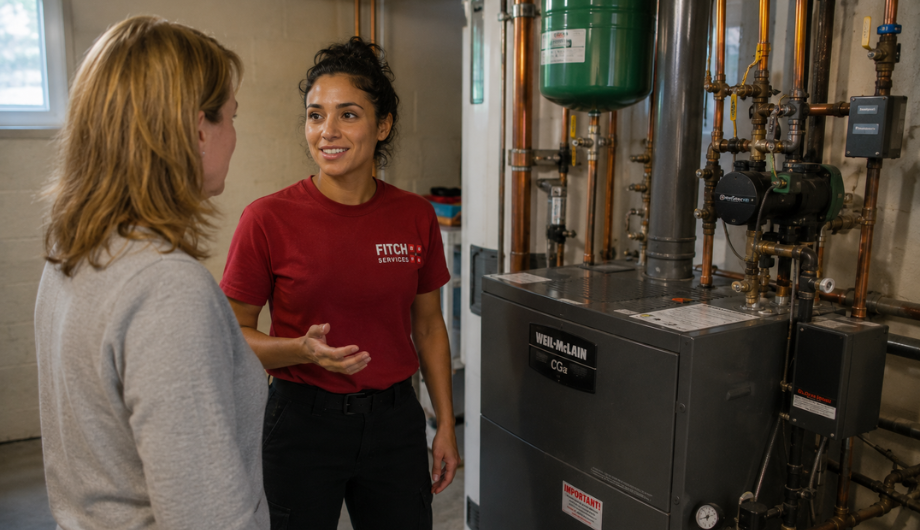
We’ve been maintaining gas and oil furnaces and boilers in Charlottesville and the surrounding area since 1983, and heating system maintenance is something we take seriously — because we understand what’s at stake when a system fails in cold weather or develops a safety issue that went undetected. We’re a licensed, family-owned company and we’ll give you a straight assessment of where your system stands and what it needs. If your heating system hasn’t been serviced recently, fall is the right time to schedule it — before the season gets underway and before the schedule fills up.
Frequently Asked Questions
HVAC filters should be checked regularly and changed as needed — for most homeowners, every one to two months is about right. A clogged filter can cause the system to operate improperly, reduce efficiency, and shorten its service life.
A gas smell near any appliance or equipment is a serious safety concern. Leave the home immediately without using light switches, phones, or anything that could create a spark. Once outside, call your gas utility's emergency line and 911. Do not re-enter the home until it has been inspected and cleared by the appropriate authorities.
Yes — carbon monoxide is a serious safety concern in any home with gas, oil, or other fuel-burning appliances. When combustion isn't complete, carbon monoxide enters the air — and because it's odorless and colorless, it's impossible to detect without a working CO detector. The U.S. Consumer Product Safety Commission advises that carbon monoxide detectors are the only reliable way to alert you to its presence. If you or a family member experiences unexplained headaches or difficulty waking, treat it as a potential emergency and seek medical care immediately. Annual maintenance of combustion heating equipment is an important part of keeping your system operating safely.
There are several factors that contribute to winter energy costs — and understanding them can make a real difference on your heating bill. Heat loss through drafty windows, doors, and air leaks is one of the biggest culprits. Fireplace dampers left open when not in use allow warm air to escape continuously. Heating unused areas of the home wastes energy that could be directed where it's actually needed. Thermostat settings make a meaningful difference — for every degree the thermostat is lowered, heating costs decrease by roughly 3%. A programmable thermostat automates this without any daily effort. Attic insulation and storm windows reduce heat loss significantly in older homes. And keeping the heating system itself properly maintained is foundational — a system running on a dirty filter or with components out of adjustment works harder and costs more to operate. If your heating bills feel higher than they should be, a system evaluation is often the right starting point — an aging or inefficient system is frequently the biggest factor of all.
An old furnace can be very dangerous. All furnaces have a major component called a heat exchanger. A heat exchanger consists of a series of closed chambers that are heated with gas or oil burners. As the heat exchanger is heated the metal it is constructed from expands and as it cools it contracts. If you can imagine a paper clip that is being bent back and forth, it will eventually break. The same goes with a heat exchanger. After years of expanding and contracting it will eventually crack. When this happens, deadly carbon monoxide gas (which is normally vented through the flue) can get into your home. A furnace’s heat exchanger should be inspected every year before the heating season.
No — replacing only the outdoor unit on an older system will sacrifice comfort and reduce the overall efficiency of the system. Mismatched components can also cause the new equipment to fail sooner than expected, and most manufacturers' warranties require matched systems. Replacing the complete system is almost always the better investment.
Still have questions?
Real Reviews from Your Charlottesville Neighbors
See All ReviewsGeorgia P.Great Sewer Line Repair
James B. (Charlottesville, Virginia)Going to use them for everything I can now including my HVAC maintenance. Replaced my sewer line for a great price. Camera'd my line for free and gave me a truly free estimate whether I used them or not. Job ended up being tougher than what was expected and not once did they bring up the possibility of changing from what they quoted me. Good group of guys right there. Chris and his crew know what they're doing.
Paul B. (Charlottesville, VA)As I commented on both Facebook and Angie's List this was a good experience. The service was performed as scheduled and well. There was a glitch in the billing, but your own people detected it and contacted me about it and took care of it on your own initiative. Greatly appreciated!
Johanne (Charlottesville, VA)Very efficient, quick diagnosis, and quick fix.
Charlottesville Family Favorites Winner
Nextdoor Neighborhood Favorite Winner
Best of HomeAdvisor Winner
Elite Service HomeAdvisor Award
Ready to Schedule Service?
Let’s take care of it together.
Submit your request and experience the Fitch difference: a local team who shows up on time, and finishes the job right — often in a single visit.