Your electrical panel is the hub of everything in your home — every light, every outlet, every appliance runs through it. Most homeowners never think about it until something goes wrong or someone tells them it needs attention. But panels have a lifespan, they have capacity limits, and some of them have problems that go well beyond just being old. Whether you’re dealing with a panel that can’t keep up or one that’s been flagged as a safety concern, understanding your options is the right first step.
Your Panel Was Built for a Different Era
The average American home built before 1990 was designed around a fraction of today’s electrical demand. Fewer appliances, no home offices running multiple monitors and workstations, no smart home systems drawing continuous power, no high-draw equipment that didn’t exist yet. A panel that was perfectly adequate when your home was built may be genuinely undersized for the way you live now — and that gap shows up as tripped breakers, circuits that can’t handle added load, and a home that can’t accommodate the upgrades you want to make. It’s not a sign that something is broken. It’s a sign that the home has outgrown its original infrastructure.
Why Homeowners Finally Make the Call
Panel upgrades rarely happen on a whim. Something usually tips the decision — an insurance renewal that flags the existing panel, a real estate transaction where the buyer’s inspector puts it in writing, or a home addition that needs dedicated circuits the current panel can’t support. Sometimes it’s simpler: breakers that trip constantly, a panel that runs warm to the touch, or an electrician who takes one look and recommends replacement. And sometimes it’s a specific new demand — a hot tub, a home workshop, or an EV charger — that finally surfaces a capacity problem that’s been building for years. Whatever brought you here, the underlying need is the same — a panel that can safely and reliably handle what your home demands of it.
Less Disruptive Than Most Homeowners Expect
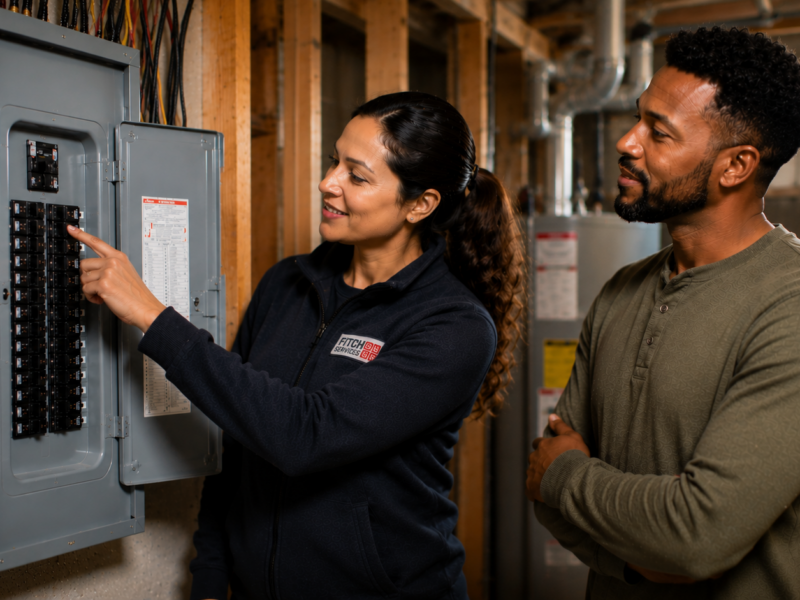
A panel upgrade means your power will be off for a portion of the day while the work is completed — that part is unavoidable. But the scope of the project is typically more contained than homeowners fear. The work happens at the panel location, permits are pulled, the utility is coordinated, and when it’s done you have a new panel that’s properly sized, clearly labeled, and ready for decades of service. Every home is a little different, but the goal is always to complete the work efficiently and leave the space clean. We’ll walk you through what to expect before we start so there are no surprises on the day.
Federal Pacific and Zinsco — Know What You Have
If your home was built between the 1950s and 1980s, there’s a meaningful chance it has a Federal Pacific Electric or Zinsco panel — two brands that have been linked to breaker failure and increased fire risk. The core problem with both is that their breakers can fail to trip during an overload, which defeats the entire purpose of a breaker. Many insurance companies now refuse to cover homes with these panels, and others charge significantly higher premiums. If you’re not sure what brand your panel is, it’s worth finding out. If you already know you have one of these, it’s worth moving on it.
Fitch Has Been Doing This in Charlottesville for Decades
Panel upgrades are one of the more significant electrical projects a home can undergo, and they’re work we take seriously. We’re a licensed, family-owned company that has been serving homes in Charlottesville and the surrounding area since 1983 — long enough to have worked on just about every panel configuration this market has to offer. We handle the permitting, coordinate with the utility, and make sure everything is inspected and signed off correctly before we consider the job complete. If your panel needs attention, we’re the right call.
Frequently Asked Questions
Common signs include breakers that trip frequently, a panel that feels warm to the touch, a home that can't accommodate added electrical demand without tripping breakers, visible corrosion or burning around breakers, a panel that's more than 25 to 30 years old, or a Federal Pacific or Zinsco panel — both of which have known safety issues. An outdated or undersized panel is also often flagged during home inspections and insurance renewals.
Both breakers and fuses serve the same fundamental purpose — they trip or blow in the event of an electrical overload to protect the wiring and prevent fires. The key difference is that a breaker is a mechanical device that can be reset after it trips, while a fuse is a one-time device that must be replaced once it blows. Modern breaker panels are significantly more efficient and offer greater levels of protection than older fuse panels.
Fuses and circuit breakers are designed to trip when a circuit is overloaded or a fault is detected — it's a safety feature, not a malfunction. Ground fault interrupters are also susceptible to moisture and weather conditions and may trip in those circumstances. Repeated tripping without an obvious cause is a sign that something in the electrical system warrants a closer look by a licensed electrician.
Electrical rewiring involves replacing the wiring throughout some or all of a home — typically when the existing wiring is outdated, damaged, or no longer safe. Homes with knob and tube wiring or aluminum wiring from the 1960s and 70s are common candidates. Signs that rewiring may be needed include frequently tripping breakers, flickering lights, burning smells, or a home inspector flagging the wiring. Rewiring is also common during major renovations when walls are already open. A licensed electrician can assess the existing system and recommend the appropriate scope of work.
It depends on your existing panel's capacity. A Level 2 charger requires a dedicated 240-volt circuit, typically rated at 40 to 50 amps. If your panel is already near capacity or is older and undersized for modern electrical demand, an upgrade may be necessary before the charger can be safely installed. A licensed electrician will assess your panel as part of the installation process and advise you on whether an upgrade is needed. In many cases the existing panel is adequate — but it's worth evaluating before purchasing equipment.
Still have questions?
Real Reviews from Your Charlottesville Neighbors
See All ReviewsGeorgia P.Great Sewer Line Repair
James B. (Charlottesville, Virginia)Going to use them for everything I can now including my HVAC maintenance. Replaced my sewer line for a great price. Camera'd my line for free and gave me a truly free estimate whether I used them or not. Job ended up being tougher than what was expected and not once did they bring up the possibility of changing from what they quoted me. Good group of guys right there. Chris and his crew know what they're doing.
Paul B. (Charlottesville, VA)As I commented on both Facebook and Angie's List this was a good experience. The service was performed as scheduled and well. There was a glitch in the billing, but your own people detected it and contacted me about it and took care of it on your own initiative. Greatly appreciated!
Johanne (Charlottesville, VA)Very efficient, quick diagnosis, and quick fix.
Charlottesville Family Favorites Winner
Nextdoor Neighborhood Favorite Winner
Best of HomeAdvisor Winner
Elite Service HomeAdvisor Award
Ready to Schedule Service?
Let’s take care of it together.
Submit your request and experience the Fitch difference: a local team who shows up on time, and finishes the job right — often in a single visit.