A water softener is one of those appliances that works quietly in the background — until it doesn’t. Most homeowners with a softener know to add salt, but beyond that the system often gets ignored until something noticeably changes with the water. Like any mechanical system, a water softener benefits from periodic attention to keep it performing the way it’s designed to — and to catch small issues before they turn into bigger ones.
Adding Salt Isn’t the Same as Maintaining It
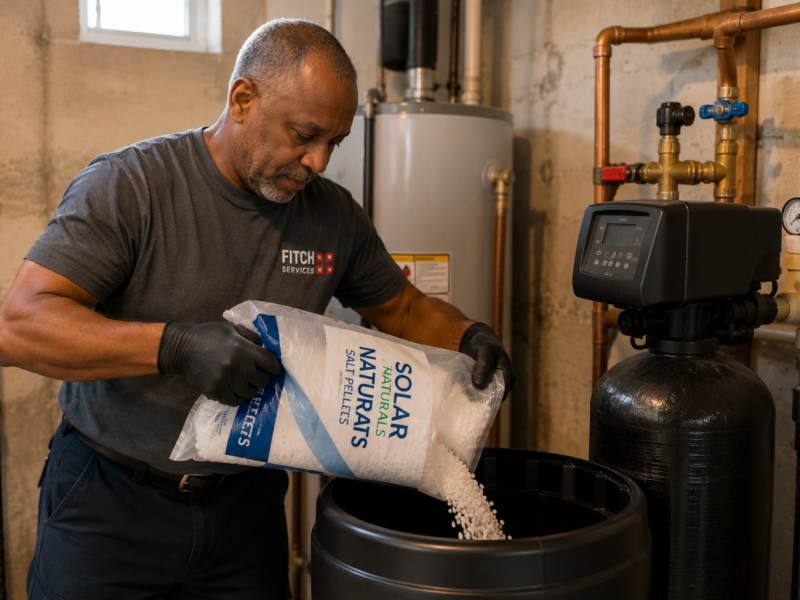
Keeping the brine tank stocked is the part of water softener ownership most people know about — and it matters. But salt replenishment is just one piece of what keeps a softener functioning correctly. The resin bed that actually removes hardness minerals from the water can become fouled over time with iron, sediment, or bacterial buildup. The brine tank can develop salt bridges or salt mushing that prevent the system from regenerating properly. Valves, seals, and controls wear out. A softener that looks like it’s working — and has plenty of salt in it — can be running at a fraction of its effectiveness without any obvious sign that something is wrong.
What Hard Water Is Actually Doing to Your Home
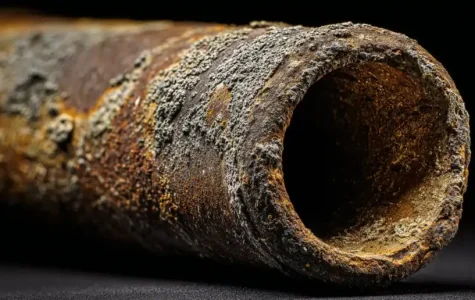
Hard water leaves its mark gradually and quietly. Scale buildup inside pipes reduces water flow over time and shortens the lifespan of water-using appliances — water heaters, dishwashers, washing machines, and coffee makers all work harder and wear faster in hard water conditions. Fixtures and surfaces develop mineral deposits that are difficult to remove and get worse over time. Soap and detergents don’t lather or rinse as effectively, which means using more of both. The whole point of a water softener is to prevent all of this — which means a softener that isn’t performing correctly is letting the damage continue while giving the homeowner a false sense that the problem is handled.
Signs Your Softener Isn’t Doing Its Job
A few indicators that a water softener may need attention: scale or white mineral deposits reappearing on fixtures and glassware, soap that doesn’t lather the way it used to, water that feels different — harder or slicker than normal — or a brine tank that seems to be using significantly more or less salt than usual. Some softener problems are subtle and don’t produce obvious symptoms until the system has been underperforming for a while. If it’s been years since the system was looked at — or if you’re not sure when it was last serviced — that alone is reason enough to have it checked.
What Professional Maintenance Actually Covers
A professional service visit gives you a clear picture of where your system actually stands — not just whether it has salt, but whether it’s regenerating correctly, whether the components are in good working order, and whether the settings are appropriate for your water conditions. What gets addressed depends on what’s found. Some systems need minor adjustments, others need more involved attention, and some are in good shape and just need a professional set of eyes to confirm it. The goal in every case is an honest assessment and a softener that’s performing the way it should.
Fitch Keeps Charlottesville Water Softeners Running Right
We’ve been servicing plumbing systems in Charlottesville and the surrounding area since 1983, and water softener maintenance is a natural extension of the work we do every day in local homes. We’re a licensed, family-owned company and we’ll give you a straight assessment of what your system needs — nothing more, nothing less. If your softener hasn’t been looked at in a while, or if something about your water has changed, give us a call.
Frequently Asked Questions
A higher water bill can indicate a leak, but it can also be caused by a running toilet or dripping faucet. Reviewing recent bills can help identify whether usage has spiked suddenly or crept up gradually — a sudden spike often points to a more significant issue, while gradual increases may indicate something smaller. If you're concerned, a plumber can help identify the source.
Water heaters should be drained and flushed at least once a year to prevent the buildup of sediment, calcium, and magnesium. This sediment accumulates at the bottom of the tank over time, reducing heating efficiency and accelerating wear on the tank lining. Regular flushing is one of the most effective ways to extend the life of a water heater.
The lifespan of a water heater depends on several factors — the type of unit, the quality of the original installation, how well it has been maintained, and the quality of the water running through it. Tankless units generally last longer than conventional tank heaters with proper upkeep. Homes with hard water or acidic water conditions tend to see shorter lifespans without treatment, as mineral buildup and corrosion accelerate wear. Regular maintenance is one of the most effective ways to get the most out of any water heater — and if yours is showing signs of age or underperforming, a professional evaluation is the best way to assess where things stand.
A water softener addresses hard water — water with high mineral content — by exchanging those minerals for sodium through a process called ion exchange. This protects pipes, appliances, and fixtures from scale buildup and improves soap lathering. A water filtration system addresses contaminants — sediment, chlorine, bacteria, heavy metals, and other substances — by physically filtering or treating the water. Some homes need one, some need the other, and some benefit from both. The right solution depends on what's actually in your water.
Seeds, bones, and anything that swells — such as pasta, rice, and wheat germ — should not go down the garbage disposal. Fibrous vegetables like celery, as well as grease, cooking oil, and coffee grounds, are also hard on disposals and drain lines.
Any mechanical device can fail over time and needs to be regularly checked. Backflow device manufacturers recommend annual testing, and the Plumbing Code requires it at minimum. A device that hasn't been tested may appear to be working while providing no actual protection — which is exactly why the requirement exists.
A backflow device is installed to protect your potable — or drinking — water from coming into contact with contaminants. When installed correctly and operating properly, it prevents contaminants from entering your water supply. This matters because under certain conditions — such as a sudden drop in water pressure — water can reverse direction through the pipes, potentially drawing contaminants back into the clean water supply. Backflow prevention is required by code in many situations.
Most water softeners benefit from a professional service visit every one to two years, though the right frequency depends on the age of the system, water hardness levels, and household usage. Regular servicing ensures the system is regenerating correctly, the resin bed is in good condition, and the unit is sized and adjusted appropriately for your water conditions. Between professional visits, keeping the brine tank stocked with salt is the primary ongoing maintenance task.
Septic systems should be inspected and pumped a minimum of once every three to four years. A full septic tank may allow unwanted solids to flow into the drain field — the part of the system that consists of a distribution box with a series of connected pipes, each allowing water to flow into a bed of stone that drains into the ground. If paper and other solids reach the drain field it becomes blocked and ineffective.
The most visible sign is blue-green staining on sinks, tubs, and fixtures — the result of copper leaching out of pipes as acidic water corrodes them. A metallic taste in the water, pinhole leaks in copper pipes, and premature failure of water-using appliances are also common indicators. These signs don't appear overnight — they develop gradually over time, which is why acidic water often goes undetected until the damage is already underway.
An acid neutralizer addresses water that is too acidic — raising its pH to prevent corrosion of pipes, fixtures, and appliances. A water softener addresses water that is too hard — removing calcium and magnesium minerals that cause scale buildup. The two systems treat different water quality problems, and some homes with well water need both. A water test is the best way to determine which issue — or combination of issues — is present in your water supply.
An acid neutralizer requires periodic replenishment of the neutralizing media as it dissolves into the water over time. How often depends on the pH of the water, the flow rate through the system, and the size of the tank — but annual service visits are a reasonable baseline for most systems. Regular servicing also includes inspecting the tank for channeling — a condition where water finds a path through the media without adequate contact time, which reduces effectiveness.
An acid neutralizer is a whole-home water treatment system that raises the pH of acidic water to a neutral or slightly alkaline level. It works by passing water through a tank filled with a neutralizing media — typically calcite or a blend of calcite and magnesium oxide — which dissolves slowly into the water and raises its pH. The result is water that is no longer corrosive to pipes, fixtures, and appliances. Acid neutralizers are most commonly needed in homes on well water where the local geology produces naturally acidic groundwater.
Simply carry out routine maintenance on your equipment and you will always have clear lines. At what temperature should I set my hot water tank? The optimum temperature is subjective. It all depends on your needs. The temperature should be set in your house based on who will use the facilities. For example, if you have young children I recommend lowering the maximum temperature to prevent accidental scalding.
Septic systems should be inspected and pumped a minimum of once every three to four years. A full septic tank may allow unwanted solids to flow into the drain field, which is the part of the system that consists of a distribution box, with a series of connected pipes. Each pipe allows water to flow into a bed of stone that drains into the ground. If paper and other solids flow into the drain field it becomes blocked and ineffective.
Still have questions?

Real Reviews from Your Charlottesville Neighbors
See All ReviewsGeorgia P.Great Sewer Line Repair
James B. (Charlottesville, Virginia)Going to use them for everything I can now including my HVAC maintenance. Replaced my sewer line for a great price. Camera'd my line for free and gave me a truly free estimate whether I used them or not. Job ended up being tougher than what was expected and not once did they bring up the possibility of changing from what they quoted me. Good group of guys right there. Chris and his crew know what they're doing.
Paul B. (Charlottesville, VA)As I commented on both Facebook and Angie's List this was a good experience. The service was performed as scheduled and well. There was a glitch in the billing, but your own people detected it and contacted me about it and took care of it on your own initiative. Greatly appreciated!
Johanne (Charlottesville, VA)Very efficient, quick diagnosis, and quick fix.
Charlottesville Family Favorites Winner
Nextdoor Neighborhood Favorite Winner
Best of HomeAdvisor Winner
Elite Service HomeAdvisor Award
Ready to Schedule Service?
Let’s take care of it together.
Submit your request and experience the Fitch difference: a local team who shows up on time, and finishes the job right — often in a single visit.